

Buccal Fat Reduction in Plano & Dallas, TX
Fullness in the lower cheeks can soften the face, blur cheek definition, and make the jawline look less distinct. For the right patient, buccal fat reduction can create a more defined lower cheek and a sharper transition between the cheek and jawline.
This procedure requires judgment. The buccal fat pad is part of the natural volume of the face. Removing too much, or removing it from the wrong face, can create hollowness that becomes more obvious with time. A striking result depends on knowing when buccal fat reduction will improve facial shape and when it will take away support the face still needs.
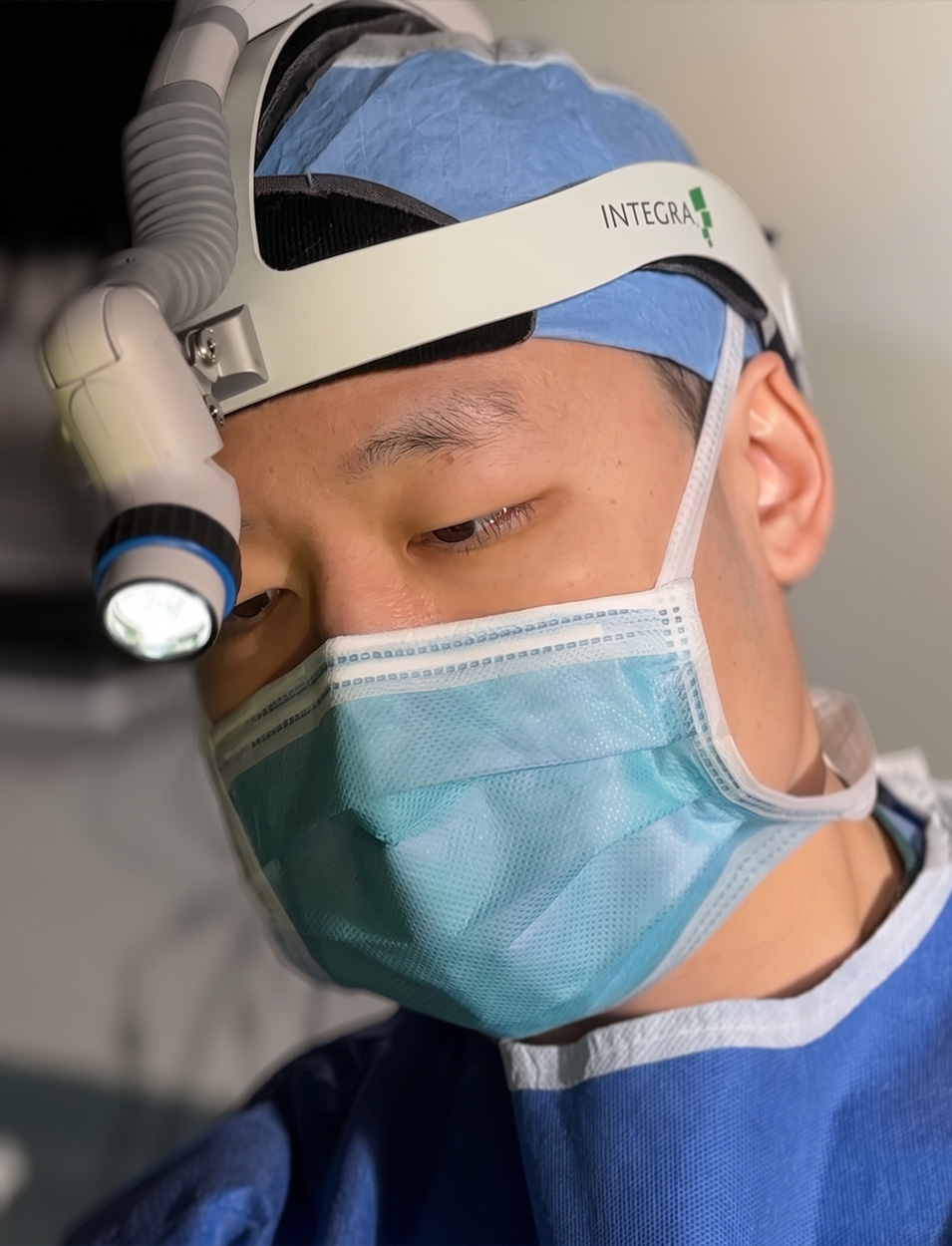
Dr. Derek Sheen approaches buccal fat reduction as a facial contouring procedure, not a shortcut to a slimmer face. He evaluates cheek structure, facial volume, jawline definition, midface support, skin quality, and long-term aging before recommending surgery. The goal is a refined and definitive improvement that still looks natural as the face moves and ages.
For some patients, buccal fat reduction is enough on its own. For others, the most complete result may involve facial fat grafting, chin augmentation, neck lift surgery, deep plane facelift, or midface lift. These procedures are considered only when they make the overall result more balanced.
Dr. Sheen’s goal is a natural but unmistakable improvement: better cheek definition, cleaner facial balance, and a more sculpted lower face without looking hollow or depleted.
Continue reading to learn more about buccal fat reduction in Plano, TX, or schedule a consultation online. Dr. Sheen sees patients from Plano, Dallas, Fort Worth, Frisco, Highland Park, the Park Cities, and across the DFW metroplex.
Quick Links


What Is Buccal Fat Reduction?
Buccal fat reduction is a facial contouring procedure that reduces fullness in the lower cheeks by removing a portion of the buccal fat pad.
The buccal fat pad sits deep within the cheek. In some patients, this fat pad creates persistent roundness or fullness in the lower face, even when the rest of the face is relatively lean. Removing part of the buccal fat pad can make the lower cheek look more defined and improve the transition between the cheek and jawline.
Buccal fat reduction may be appropriate for patients who notice:
- Persistent fullness in the lower cheeks
- A round or overly soft lower face
- Less definition between the cheek and jawline
- Facial fullness that does not change much with weight loss
- A desire for more cheek contour
- A lower face that looks heavier than the rest of the face
- Good cheek support with enough volume to tolerate selective reduction
- A desire for facial refinement without adding volume
Buccal fat reduction is not a weight loss procedure. It also does not treat jowls, loose skin, or neck laxity. Those concerns require a different procedure, such as a neck lift, deep plane facelift, or chin refinement.
The best candidates have true buccal fullness and enough facial volume to maintain a healthy, natural look after surgery.
Is Buccal Fat Reduction Performed Alone or With Other Procedures?
Buccal fat reduction can be performed on its own when the concern is isolated fullness in the lower cheek.
For some patients, the most balanced result may come from combining buccal fat reduction with another procedure. This is common because facial shape depends on more than the buccal fat pad. The cheeks, jawline, chin, neck, and midface all affect how lower cheek fullness is perceived.
During the consultation, Dr. Sheen evaluates whether buccal fat is the main issue or whether another feature is contributing to the concern.
Some patients may benefit from buccal fat reduction combined with:
- Chin augmentation when chin projection affects lower facial balance
- Neck lift when the jawline or neck lacks definition
- Facial fat grafting when volume should be restored in other areas while reducing lower cheek fullness
- Deep plane facelift when lower facial heaviness is related to tissue descent
- Midface lift when cheek descent is affecting the lower face
- Male facelift when masculine lower facial definition is the goal
- Skin resurfacing when skin quality also needs improvement
These procedures are not added automatically. They are considered when they help create a more comprehensive, complete, and natural result.
Why Does Lower Cheek Fullness Matter?
The lower cheek has a strong effect on facial shape.
When the lower cheek is full, the face can look more square, rounder, softer, or less defined. The cheek may blend into the jawline without a clean transition. In some patients, this fullness makes the face look heavier than their body or profile would suggest.
Several factors can affect lower cheek fullness:
- Buccal fat volume can create persistent roundness in the lower cheeks.
- Cheek structure influences how much definition is visible after surgery.
- Age and volume loss determine whether removing fat will help or create hollowness later.
- Jawline shape affects whether the lower face looks clean or soft.
- Chin projection can change how the cheek and jawline are perceived.
- Skin quality affects how well the face adapts to contour change.
For Dr. Sheen, buccal fat reduction works best when the fullness is coming from the buccal fat pad itself. If the concern is really jowling, skin laxity, swelling, weight fluctuation, or midface descent, removing buccal fat may not create the right result.
Who Is a Good Candidate for Buccal Fat Reduction?
A good candidate for buccal fat reduction is usually someone with persistent lower cheek fullness and enough facial volume to tolerate selective reduction.
Common concerns may include:
- Roundness in the lower cheeks
- A “baby face” appearance that persists into adulthood
- Lower cheek fullness that does not improve with weight changes
- A softer cheek-to-jawline transition
- A desire for more facial definition
- Good cheekbone structure
- Good skin quality
- Stable weight
- Realistic expectations about what the procedure can and cannot do
The right candidate is also someone who wants refinement, not an overly sculpted face. Buccal fat reduction can create a striking change in the right patient, but it should not make the face look hollow, severe, or depleted.
Some patients are better suited for facial fat grafting, chin augmentation, neck lift surgery, or a deep plane facelift. Others may not need surgery at all. Dr. Sheen determines this during consultation.

Dr. Sheen’s Approach to Buccal Fat Reduction
Dr. Sheen approaches buccal fat reduction conservatively and anatomically.
Once buccal fat is removed, it does not grow back in the same way. That can be a benefit for the right patient, but it also means the decision has to be made carefully.
Dr. Sheen evaluates the entire face before recommending buccal fat reduction. He looks at cheekbone structure, lower cheek fullness, midface support, jawline definition, chin projection, facial volume, skin thickness, and how the face may age over time.
This is especially important because a face that looks full in the lower cheek at age 25 may naturally lose volume later. Removing too much buccal fat can create a hollow or gaunt appearance as that aging process continues.
Dr. Sheen’s approach is designed to create a significant but controlled result. The goal is not to hollow the cheeks. The goal is to refine the lower face while preserving enough softness and support for the result to age well.
How Does Dr. Sheen Approach a Facial Plastic Surgery Consultation?
Patients often come in wanting a more sculpted face, but the cause of lower facial fullness is not always the same. In some cases, the issue is true buccal fullness. In others, it may be due to chin projection, jawline shape, weight fluctuation, jowling, skin quality, or midface descent. Dr. Sheen’s consultation is designed to separate these concerns clearly, so the plan is based on anatomy rather than assumption.
His buccal fat reduction consultations are organized around three concerns: perspective, expectations, and trust.
Perspective.
The consultation begins by looking at the face as a whole. Dr. Sheen evaluates the cheekbones, buccal fat area, jawline, chin, midface, neck, skin quality, and overall facial balance. The goal is to understand whether buccal fat reduction is the right procedure or whether another feature is driving the concern.
Expectations.
The conversation covers what buccal fat reduction can improve, what it cannot, and what recovery realistically looks like. Dr. Sheen is direct about the permanent nature of the procedure, the risk of hollowing in the wrong candidate, and whether the result will be more dramatic with a related procedure such as chin augmentation, neck lift, or facial fat grafting. A meaningful result should look natural, but it should also be significant enough to improve facial definition.
Trust.
There is no pressure to proceed. The consultation is meant to give patients clarity about what is happening in the face and which approach would create the most balanced result. For some patients, that may be buccal fat reduction. For others, a different facial contouring or rejuvenation plan may be better. Everything begins with an honest evaluation.
What Happens During Buccal Fat Reduction Surgery?
Buccal fat reduction is typically performed through small incisions concealed entirely inside the mouth, leaving no visible external scars. When combined with a facelift, the buccal fat can often be accessed and reduced through the existing facelift incisions, avoiding the need for additional incisions.
During the procedure, Dr. Sheen accesses the buccal fat pad from inside the cheek and removes a carefully measured portion of fat. The amount removed depends on the patient’s anatomy and the desired degree of refinement.
The procedure is not about removing as much fat as possible. It is about removing the right amount. Too little may not create enough definition. Too much can make the face look hollow later. This is why judgment matters.
In many patients, buccal fat reduction can be performed as an in-office procedure. It may also be performed with other facial procedures in a surgical setting when a more comprehensive plan is being done.
The details are decided before surgery, based on the patient’s anatomy, goals, and overall treatment plan.

Dr. Sheen’s Training and Experience
Dr. Sheen’s approach to buccal fat reduction is shaped by his training in facial anatomy, facial aesthetics, and comprehensive facial rejuvenation.
He completed residency training at UT Southwestern, with surgical experience at Parkland Memorial Hospital and the Dallas VA. He then completed advanced facial plastic surgery fellowship training at NYU under three internationally recognized facial plastic surgeons: Dr. David Rosenberg, Dr. Matthew White, and Dr. Philip Miller.
During fellowship, Dr. Sheen trained in facelift surgery, rhinoplasty, brow and eyelid procedures, facial fat grafting, revision surgery, and facial contouring procedures. This matters because buccal fat reduction is rarely just about cheek fullness. The jawline, chin, midface, and long-term facial volume all influence whether the result will look balanced.
Dr. Sheen completed additional fellowship training at Asan Medical Center in Seoul, South Korea. During this fellowship, Dr. Sheen developed a broader exposure to and respect for different facial anatomies, aesthetic ideals, and cultural perspectives that helps strengthen this relationship.
Dr. Sheen also served as a clinical instructor at NYU, teaching resident physicians in the operating room while continuing to refine his own surgical approach.
His current technique reflects that background: careful planning, respect for facial structure, and a consistent focus on natural movement, facial balance, and durable improvement.
SHEEN
What Does a Good Buccal Fat Reduction Result Look Like?
A remarkable buccal fat reduction result creates better lower cheek definition without making the face look hollow.
The lower cheeks should look slimmer. The cheek-to-jawline transition should look more refined. The face should still look healthy, balanced, and natural in motion.
For Dr. Sheen, the goal is a natural but unmistakable improvement: more definition, better facial shape, and a result that fits the patient’s structure without calling attention to surgery.
A good buccal fat reduction result does not make the face look empty. It restores proportion.


6 Months Post-Op


The Whole Face Approach to Facial Contouring
Buccal fat reduction cannot be evaluated in isolation.
In consultation, Dr. Sheen looks at cheek fullness, cheekbone projection, midface volume, under-eye support, jawline shape, chin projection, neck definition, facial volume, skin quality, and age-related changes. Each detail affects the final result.
A patient may think they need buccal fat reduction because the face looks round, but the real issue may be a weak chin or soft jawline. Another patient may want more cheek definition, but volume loss in the midface may make buccal fat reduction a poor choice. A patient may have true buccal fullness, but also early jowling that requires a different plan.
This is where Dr. Sheen’s approach becomes comprehensive rather than formulaic. He studies how the face is shaped and how each area contributes to the overall appearance.
For some patients, buccal fat reduction is the key maneuver. For others, the most natural and remarkable result may involve chin augmentation, facial fat grafting, neck lift surgery, or a more complete facial rejuvenation plan.
Buccal Fat Reduction Recovery
Buccal fat reduction recovery is usually more focused than recovery from larger facial procedures. Recovery may be longer if the procedure is combined with chin augmentation, neck lift surgery, facelift surgery, fat grafting, or another treatment.
- The first few days are usually the most noticeable. Swelling, cheek fullness, mild soreness, and tightness inside the mouth can be expected. Patients should follow Dr. Sheen’s instructions for oral hygiene and diet.
- By the end of the first week, many patients feel meaningfully better. Swelling may still be present, but discomfort is usually manageable. Patients may be asked to avoid strenuous activity and follow a soft-food diet early in recovery.
- By two weeks, many patients feel comfortable socially. The cheeks may still look swollen, so the final contour will not be visible yet. This is normal.
- By four to six weeks, the lower cheek contour begins to look more refined. Swelling continues to settle, and the improvement in facial definition becomes clearer.
- By three months, the result is usually more visible. The lower cheeks look cleaner, and the face begins to show the intended contour more clearly.
- Final results continue to refine over several months. Buccal fat reduction results take time because swelling inside the cheek resolves gradually. The final result should look natural, not sudden or hollow.
Schedule a Buccal Fat Reduction Consultation
Dr. Sheen sees buccal fat reduction patients from Plano, Dallas, Fort Worth, Frisco, Highland Park, the Park Cities, and across North Texas, as well as patients who travel for consultation. To request a consultation, call (972) 316-4555 or submit an inquiry online.
Dallas–Fort Worth Buccal Fat Reduction FAQs
Is buccal fat reduction permanent?
Yes. Buccal fat reduction is considered permanent because the removed portion of the buccal fat pad does not grow back in the same way. This is one reason patient selection matters so much.
Will buccal fat reduction make my face look hollow?
It can if too much fat is removed or if the procedure is performed on the wrong candidate. Dr. Sheen evaluates facial volume, cheek structure, age, skin quality, and long-term aging before recommending surgery.
Is buccal fat reduction good for a round face?
Sometimes. Buccal fat reduction may help when roundness comes from true lower cheek fullness. If the roundness is related to weight, jawline structure, chin projection, or skin laxity, another approach may be better.
Can buccal fat reduction improve my jawline?
It can improve the transition between the lower cheek and jawline, but it does not tighten the jawline or treat jowls. Patients with jowling, neck laxity, or poor jawline definition may need a neck lift, chin augmentation, or deep plane facelift.
Can buccal fat reduction be performed in the office?
In many patients, yes. Buccal fat reduction can often be performed in the office, depending on the patient’s anatomy, comfort, and whether it is being combined with other procedures.
Where are the incisions placed?
The incisions are placed inside the mouth, usually inside the cheek. This means there are no visible external scars. When done with a facelift, no extra incisions are placed.
How long does swelling last after buccal fat reduction?
Early swelling is most noticeable during the first one to two weeks. The cheeks continue to refine over several months, and the final result becomes clearer as deeper swelling resolves.
Will I see results right away?
No. The face often looks fuller at first because of swelling. The contour becomes more visible gradually, usually over several weeks to months.
Can buccal fat reduction be combined with chin augmentation?
Yes. Chin projection can strongly affect the lower face and jawline. In some patients, chin augmentation creates better overall balance than buccal fat reduction alone.
Can buccal fat reduction be combined with facial fat grafting?
Yes, in select cases. This may sound contradictory, but the goal is balance. Buccal fat reduction can reduce lower cheek fullness while fat grafting restores volume in areas such as the temples, cheeks, or under-eyes. The plan depends on the face.
Is buccal fat reduction right for younger patients?
Sometimes. Many candidates are younger because buccal fullness is often congenital and more noticeable earlier in life. Still, age is not the only factor. Dr. Sheen considers how the face may age before recommending permanent fat reduction.
What happens if I lose weight after buccal fat reduction?
Weight loss can make the face look thinner, and prior buccal fat reduction may make that thinning more noticeable. Patients should be at a stable, healthy weight before surgery whenever possible.
What if I am not a good candidate?
Dr. Sheen will be direct. Some patients are better served with no surgery, chin augmentation, neck lift, facial fat grafting, skin treatments, or a different facial contouring plan. The recommendation depends on the anatomy.