

Midface Lift in Plano & Dallas, TX
A midface lift, performed thoughtfully, does not simply lift the cheeks. It addresses the jowls, restores the entire center of the face, and improves lower eyelid support.
The midface is one of the areas where facial aging can be most difficult to describe. Patients may not always say, “My cheeks have dropped.” More often, they notice that the face looks more square, heavier, flatter, more tired, or less defined than it once did. The area beneath the eyes may look hollow, the cheeks may sit lower, and the folds around the nose and mouth may look deeper. The face may still look like itself, but the structure that once gave it shape has shifted.
Dr. Derek Sheen approaches midface rejuvenation by looking at the face as a connected system. The cheeks do not age separately from the lower eyelids, nose, nasolabial folds, jowls, jawline, or neck. When the midface descends, it can affect all of these areas. Restoring this region can create a significant improvement in facial balance, not because the face looks pulled or changed, but because the cheek support has been returned to a more natural position.
For many patients, Dr. Sheen addresses the midface through his extended preservation deep plane facelift technique. This allows him to work beneath the skin, release the deeper retaining ligaments, and reposition the cheek and midface more completely. Dr. Sheen’s goal is to create a restorative, unmistakable improvement that still looks composed, elegant, and natural in motion.
Continue reading to learn more about midface lift surgery in Plano, TX, or schedule a consultation. Dr. Sheen sees patients from Plano, Dallas, Frisco, Flower Mound, Highland Park, Park Cities, Southlake, Fort Worth, throughout North Texas, and across the DFW metroplex.
Quick Links
What Is a Midface Lift?
A midface lift is a type of facelift that focuses on the cheek region and the central third of the face. This area includes the lower eyelid-cheek junction, the jowls and cheek pad, the area beside the nose and mouth, and the soft tissue that influences the nasolabial folds and marionette lines.
A midface lift may be appropriate for patients who notice:
- Heaviness or descent in the cheeks
- Hollowing beneath the eyes
- A longer or more tired lower eyelid-cheek transition
- Deepening nasolabial folds and marionette lines
- Flattening through the cheek area
- A squared face that looks less supported or less defined
- Lower-face heaviness connected to cheek descent
A midface lift is designed to reposition this descended tissue rather than simply fill around it or tighten the surface. When the cheek is restored to a better position, the face and eyes can look more open, more rested, and more balanced.
This is different from treating the midface with filler alone. Filler can be useful in carefully selected areas, but adding volume to a descended cheek does not correct the underlying descent. In some patients, it can make the face look heavier. A midface lift addresses the structural issue more directly.
Dr. Sheen’s approach is centered on restoring support, not creating an exaggerated cheek. The result should feel refined and definitive, but not artificial.
Is a Midface Lift Performed Alone or With a Comprehensive Facelift and Neck Lift?
Sometimes the midface can be treated as a focused procedure. More often, it is addressed as part of a larger facial rejuvenation plan.
That does not mean the midface is an afterthought. For Dr. Sheen, it is often one of the central areas of the operation. The cheek connects the upper and lower face. If it is not treated thoughtfully, the result can look less complete, even when the jawline or neck has improved.
During your consultation, Dr. Sheen evaluates whether the main issue is isolated midface descent, more complete lower facial aging, neck laxity, volume loss, eyelid aging, or a combination of these concerns. The recommendation depends on the anatomy.
Some patients may benefit from an extended deep plane facelift with midface elevation, selective facial fat grafting, eyelid surgery, brow lifting, or chin refinement to create the most balanced result. These complementary procedures are considered only when they will meaningfully contribute to a better result.
Why Does the Midface Matter So Much?
The midface sits between the eyes and the lower face. Because of that position, it has an outsized effect on how the entire face is perceived.
When the cheek descends, the change does not stay limited to the cheek itself. It can make the under-eye area look more tired. It can deepen the nasolabial folds. It can contribute to heaviness near the mouth. It can weaken the transition into the jawline. This is why a facelift that improves only the lower face can sometimes look incomplete.
Dr. Sheen places particular emphasis on the midface because this is where many facelift results either succeed or fall short. A cleaner neck and jawline matter, but if the cheek remains low, the face may still look aged through the center. The improvement may be visible, but not complete.
A well-planned midface lift can create a more significant and remarkable change by restoring the relationship between the cheek, lower eyelid, mouth, and jawline. The face does not look tighter. It looks better supported.
Who Is a Good Candidate for a Midface Lift?
A good candidate for a midface lift is typically someone who notices aging through the center of the face rather than only the neck or jawline. Common concerns may include:
- Heaviness or descent in the cheeks
- Hollowing beneath the eyes
- A longer or more tired lower eyelid-cheek transition
- Deepening nasolabial folds and marionette lines
- Flattening through the cheek area
- A squared face that looks less supported or less defined
- Lower-face heaviness that seems connected to cheek descent
The right candidate is also someone who wants a meaningful lasting improvement, not a barely noticeable temporary change. A midface lift is designed to restore the deeper position of the cheek and improve the structure of the face.
Patients who are better suited for a full deep plane facelift may have more significant jowling, neck laxity, or lower facial descent. Patients who are better suited for nonsurgical treatment may have early volume loss without meaningful tissue descent. Dr. Sheen determines this during consultation.
Dr. Sheen’s Extended Deep Plane Approach to the Midface
Dr. Sheen often addresses the midface through an extended preservation deep plane approach.
The principle is straightforward: less disruption at the surface, deeper and more comprehensive work below.
Preservation refers to how the skin is handled. Instead of lifting the skin aggressively and asking it to carry the result, Dr. Sheen keeps the skin work more conservative. This helps preserve circulation, reduce unnecessary tissue disruption, and support smoother healing in appropriate patients.
Extension refers to the deeper release. In Dr. Sheen’s approach, the dissection is carried farther into the midface so the cheek and surrounding retaining ligaments can be released more completely. This matters because tissue cannot be repositioned well if it remains tethered to the same fixed points it has been descending around.
Once those deeper attachments are released, the cheek can be repositioned along a vector that fits the patient’s anatomy. This can improve cheek height, soften the fold beside the nose, reduce heaviness through the center of the face, and support a more balanced transition into the lower face.
The lift comes from the deeper framework. The skin is allowed to settle over that new support. This is what helps the result look natural rather than stretched.
How Does Dr. Sheen Approach a Facial Plastic Surgery Consultation?
A successful midface lift result begins with understanding what has actually changed in the center of the face.
Patients often come in noticing that they look more tired, flatter, or heavier through the cheeks, but they may not know exactly why. In some cases, the issue is true midface descent. In others, it may be volume loss, lower eyelid aging, skin quality, or a combination of several changes. Dr. Sheen’s consultation is designed to separate these concerns clearly, so the treatment plan is based on anatomy rather than guesswork.
His midface lift consultations are organized around three concerns: perspective, expectations, and trust.
Perspective.
The consultation begins by looking at the face as a whole, not just the cheeks. Dr. Sheen evaluates the lower eyelids, cheek position, nasolabial folds, jawline, neck, and overall facial balance. The goal is to understand whether the midface is the primary issue or whether it is part of a more complete pattern of facial aging.
Expectations.
The conversation covers what a midface lift can improve, what it cannot, and whether the procedure should be performed alone or as part of an extended deep plane facelift. Dr. Sheen is direct about recovery, limitations, and the kind of result that can reasonably be achieved. A meaningful result should look natural, but it should also be significant enough to make the face look better supported and more rested.
Trust.
There is no pressure to proceed. The consultation is meant to give patients clarity about what is happening in their face and which approach would create the most balanced result. For some patients, that may be a midface lift. For others, a more comprehensive facelift plan may be the better option. Everything begins with an honest evaluation.
The Whole Face Approach to Midface Rejuvenation
The midface cannot be evaluated in isolation.
In consultation, Dr. Sheen looks at brow position, lower eyelid support, cheek descent, nasolabial folds, jawline definition, chin projection, neck contour, facial volume, buccal fullness, and skin quality. These features all influence one another. A cheek that is low may make the under-eye area look more hollow. A weak chin may make the lower face appear less defined. Volume loss may make descent look more pronounced.
This is why Dr. Sheen’s approach is comprehensive rather than formulaic. He does not look at one concern and immediately assign one procedure. He studies how the face has changed and how each part contributes to the overall appearance.
For some patients, midface elevation is the key maneuver. For others, the most natural and striking result comes from combining midface lift with a deep plane facelift, lower eyelid surgery, fat grafting, or another targeted facial rejuvenation procedure.

Dr. Sheen’s Training and Experience
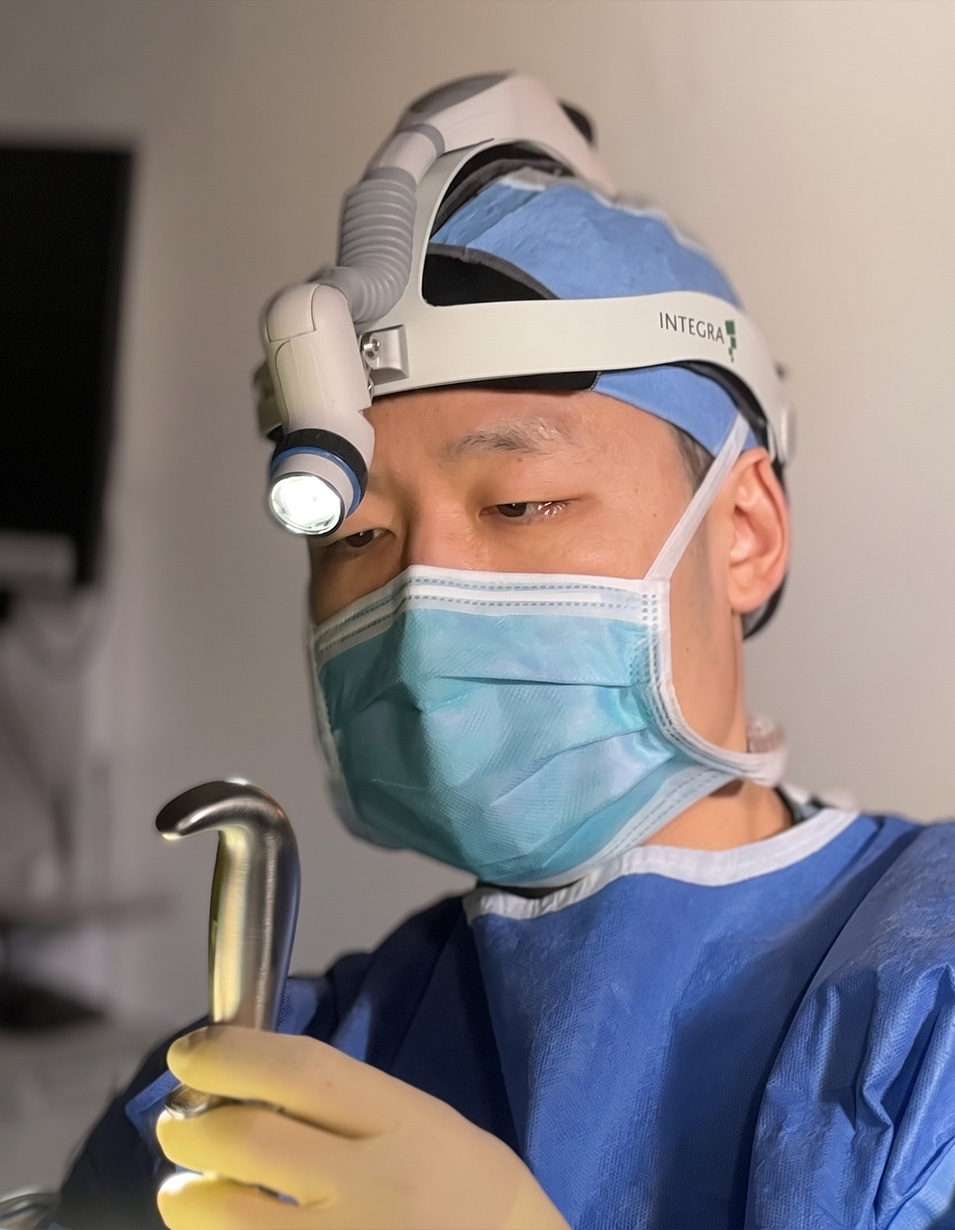
Dr. Sheen’s approach to midface lift surgery is shaped by his training in facial anatomy, facial aesthetics, and modern deep plane rejuvenation.
He completed residency training at UT Southwestern, with surgical experience at Parkland Memorial Hospital and the Dallas VA. He then completed advanced facial plastic surgery fellowship training at NYU under three internationally recognized facial plastic surgeons: Dr. David Rosenberg, Dr. Matthew White, and Dr. Philip Miller.
During his fellowship, the deep plane facelift was a major focus. This included primary facial rejuvenation, revision surgery, brow and eyelid procedures, fat grafting, and techniques designed to improve the midface more completely. Dr. Sheen also served as a clinical instructor at NYU, teaching resident physicians in the operating room while continuing to refine his own surgical approach.
During his transition from New York to Dallas, he completed a fellowship in Seoul, Korea at Asan Medical Center under Professor Jong Woo Choi, Chief and Professor of Plastic and Reconstructive Surgery. The fellowship gave him direct exposure to advanced rhinoplasty techniques from surgeons at the center of Korea’s global reputation in facial aesthetics, insight he has brought back into his own approach to the nose.
His current technique reflects that background: careful preservation at the surface, more complete work in the deeper facial layer, and a consistent focus on natural movement, facial balance, and durable improvement.
SHEEN
What Does a Good Midface Lift Result Look Like?
A strong midface lift restores support through the center of the face. The cheeks sit higher, the under-eye area looks smoother, and the face appears lighter without looking pulled or overfilled. For Dr. Sheen, the goal is a natural but unmistakable improvement: better cheek position, cleaner facial balance, and a more rested look that still feels completely like the patient.
What Happens During Midface Lift Surgery?
The exact surgical plan depends on whether the midface lift is performed alone or as part of an extended deep plane facelift.
In general, the goal is to release the deeper attachments that are holding the descended cheek in its aged position. Once those retaining ligaments are released, the cheek tissue can be elevated and repositioned more naturally. The skin is not pulled tightly to create the effect. The work is done beneath the surface, where the descent has occurred.
When performed as part of an extended deep plane facelift, the midface is addressed through the deeper facial plane. This allows Dr. Sheen to lift the cheek more completely while also improving the lower face, jawline, and neck when needed.
In some cases, facial fat grafting may be added to restore volume that has been lost with age. This is different from lifting. A lift repositions tissue, while fat grafting replaces volume; when used together, the result can look more complete and restorative for the right patient.
Midface Lift Recovery
Midface lift recovery depends on whether the procedure is performed alone or as part of a larger facial rejuvenation plan. When it is combined with an extended deep plane facelift, eyelid surgery, or fat grafting, recovery is usually closer to a facelift timeline.
- The first three to four days are usually the most noticeable. Swelling, tightness, and bruising can be expected, especially through the cheeks and lower eyelid area. Patients should plan to rest at home, stay hydrated, and sleep with the head elevated.
- By the end of the first week, many patients start to feel better. The cheeks may still feel firm, full, or higher than expected. This is normal early in healing and gradually settles as swelling improves.
- By two to three weeks, many patients feel more comfortable in social settings. Some swelling may still be present, but it is often less obvious to others, especially when the midface lift is performed as part of a well-planned facial rejuvenation procedure.
- By four to six weeks, most patients are returning to more normal routines. Light exercise may resume earlier with Dr. Sheen’s guidance, while more strenuous activity is usually delayed until the deeper tissues have had more time to heal.
- By three months, the result usually looks more refined. The cheeks begin to feel softer and more settled, and the improvement through the center of the face becomes clearer.
Final results continue to develop over several months. Midface lift results are not instant. The deeper tissues need time to settle into their new position, and the face continues to look more natural as swelling resolves.
Schedule a Midface Lift Consultation
Dr. Sheen sees midface lift patients from Plano, Dallas, Fort Worth, Frisco, Highland Park, the Park Cities, and across North Texas, as well as patients who travel for consultation.
A midface lift consultation is personal, detailed, and designed to clarify whether cheek descent is the main concern or part of a larger facial rejuvenation plan. To request a consultation, call (972) 316-4555 or submit an inquiry online.
Dallas-Fort Worth Midface Lift FAQs
Is a midface lift the same as a comprehensive facelift?
No. A midface lift focuses more specifically on the cheek and central face with fewer incisions. A facelift usually addresses the lower face, jawline, and neck, though Dr. Sheen’s extended deep plane facelift also places significant emphasis on the midface. For many patients, the midface is treated as part of a more complete facelift plan.
Can a midface lift improve nasolabial folds?
It can help soften them when the folds are caused partly by cheek descent. The nasolabial fold often deepens when descended cheek tissue settles against the more fixed area beside the nose. By repositioning the cheek, the fold can look less heavy. However, some folds are related to anatomy, skin quality, or volume loss, so the degree of improvement varies.
Will a midface lift make my cheeks look too full?
That is not the goal. Dr. Sheen’s approach is focused on restoring cheek position, not creating exaggerated volume. If fat grafting is used, it is done selectively and carefully. The result should look supported and balanced, not overfilled.
Does a midface lift help the jawline?
It can support the jawline indirectly. When cheek tissue descends, it can contribute to lower-face heaviness and jowling. Repositioning the cheek more completely can help reduce that downward weight. Patients with more significant jowls or neck laxity may still need a deep plane facelift or neck work for the most complete result.
What is the difference between a midface lift and lower eyelid surgery?
Lower eyelid surgery addresses eyelid bags, excess skin, or eyelid contour. A midface lift addresses cheek position and support. These areas are closely related, so some patients benefit from treating them together. Dr. Sheen evaluates the lower eyelid and cheek as a single transition rather than two unrelated features.
Will the result look natural?
Yes, that is the intention. Natural does not mean barely changed. In Dr. Sheen’s approach, a natural result can still be striking, significant, and unmistakable. The key is that the cheek is restored in a way that fits the patient’s anatomy and moves naturally with the rest of the face.
Is a midface lift right for younger patients?
Sometimes. Age is less important than anatomy. Some younger patients have early cheek descent, hollowing, or facial heaviness that may benefit from structural correction. Others are better served with nonsurgical treatment or no treatment at all. Dr. Sheen will be direct about whether surgery makes sense.